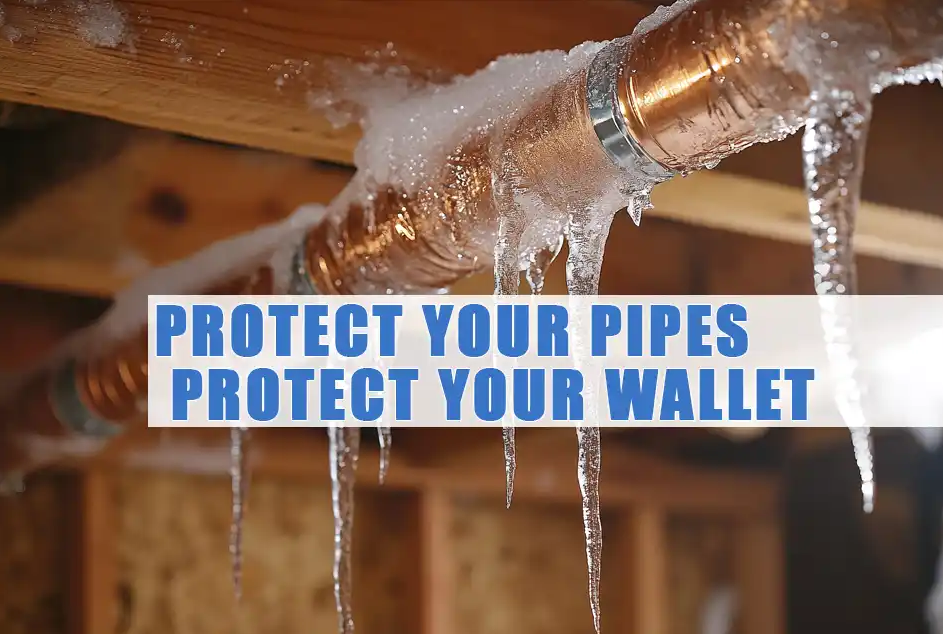
Arctic Blast to Hit New England
- Temperatures are projected to drop below freezing for 10 or more days in a row with overnight lows in the single digits before factoring in wind chills.
- Meters that have been upgraded with EyeOnWater technology are already reporting dangerously low inside temperatures near freezing.
- As of 7 AM on 1-21-2026 the total reported meters with temperature warnings is 1.5% of those with EyeOnWater technology. This number is expected to climb as temperatures get colder over the weekend.
- Residents can create an EyeOnWater account by entering their Account Number-Customer Number along with some additional information.
Tips for Preventing Frozen Pipes
- When the weather is very cold outside, let the water drip from faucets with pipes in outside walls. Running water through the pipe – even at a trickle – helps prevent pipes from freezing. The temperature of the running water is above freezing.
- Open kitchen and bathroom cabinet doors to allow warmer air to circulate around the plumbing. Be sure to move any harmful cleaners and household chemicals up out of the reach of children.
- Keep the thermostat set to the same temperature day and at night. Don’t lower the temperature at night during the cold spell. It might raise the heating bill a little bit but can prevent a much more costly repair job if pipes freeze and burst.
- If you will be going away during cold weather, leave the heat on in your home or business set to a temperature no lower than 55ºF.
- Shut off outside water.
To Thaw Frozen Pipes
- If you turn on a faucet and only a trickle comes out, suspect a frozen pipe. Locate the area of the water pipe that might be frozen. The most likely places are pipes running against exterior walls or where your water service enters your home.
- Keep the faucet open. As you treat the frozen pipe and the frozen area begins to melt, water will begin to flow through the frozen area. Running water through the pipe will help melt more ice in the pipe.
- Apply heat to the section of pipe using an electric heating pad wrapped around the pipe, an electric hair dryer, or wrapping pipes with towels soaked in hot water. Do not use a blowtorch, kerosene or propane heater, charcoal stove, or other open flame devices. A blowtorch can make water in a frozen pipe boil and cause the pipe to explode. All open flames in homes present a serious fire danger, as well as a severe risk of exposure to lethal carbon monoxide.
- Apply heat until full water pressure is restored. If you are unable to locate the frozen area, if the frozen area is not accessible, or if you cannot thaw the pipe, call a licensed plumber.
- Check all other faucets in your home to find out if you have additional frozen pipes. If one pipe freezes, others may freeze, too.
- Be careful using space heaters to warm up areas near pipes. Don’t overload circuits. Plug space heaters directly into wall outlets. Try not to use extension cords but if you must, make sure it is rated for the appliance, and only use one. Heat producing appliances need stronger extension cords than lamps.
- Remember not to leave the door of a gas oven open; it will produce large amounts of carbon monoxide.
- Be sure there are working smoke and carbon monoxide alarms on every level of the home.